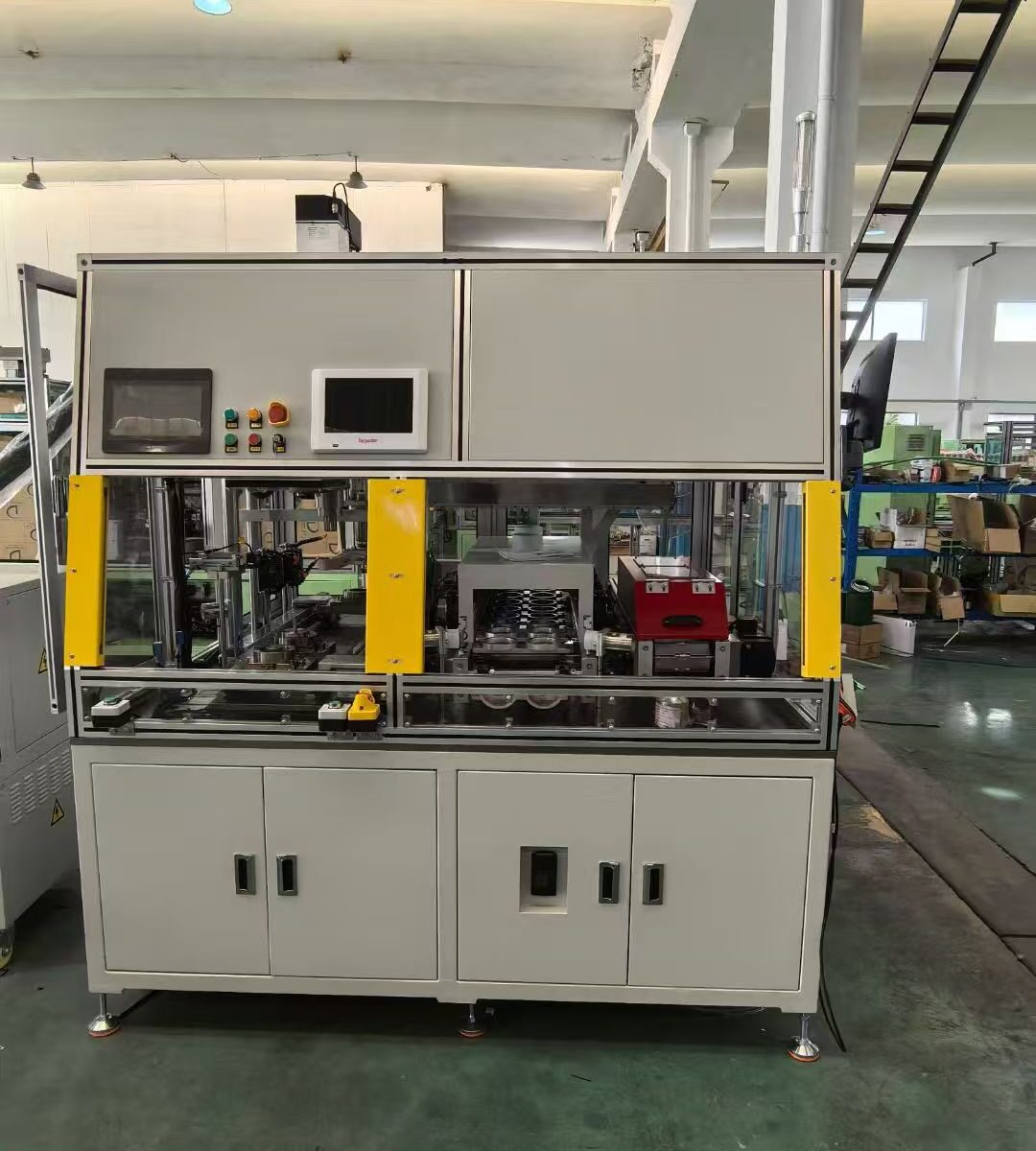
Brushless DC (BLDC) motors have become an important part of modern electrical and mechanical systems. They are used in electric vehicles, cooling equipment, industrial automation, power tools, pumps, drones, household appliances and many other applications where efficient and dependable motor performance is required. As demand for these motors continues to grow, manufacturers are looking for ways to improve production speed without compromising winding quality, electrical performance or consistency.
One of the most important stages in BLDC motor manufacturing is coil winding. The winding process determines how copper wire is arranged around the stator and has a direct influence on the motor’s electrical characteristics, efficiency and reliability. Manual winding can be suitable for low-volume or specialised production, but it becomes difficult to maintain consistent results when production quantities increase. This is where bldc motor winding machines provide a practical manufacturing solution.
Modern winding equipment can automate important parts of the process while giving manufacturers better control over wire tension, winding patterns, coil placement and production parameters. However, the value of such equipment is not simply about producing more motors per hour. Properly selected machinery can also help manufacturers achieve repeatable winding quality and reduce avoidable production problems.
Why BLDC Motor Winding Requires Precise Control
A BLDC motor uses electronically controlled commutation instead of mechanical brushes and a conventional commutator. Its construction normally includes a permanent-magnet rotor and a stator containing carefully arranged copper windings. When electrical current passes through the stator windings, a magnetic field is produced and controlled electronically to create rotational movement.
The arrangement of the stator winding is therefore important. The number of turns, winding distribution, wire diameter, winding direction and coil positioning all need to correspond with the motor’s design. Even relatively small inconsistencies can affect the electrical characteristics of individual motors. For manufacturers producing motors in large quantities, maintaining this consistency manually can be challenging.
Wire tension is another important factor. If the tension is too low, the winding may become loose and occupy more space than expected. If it is too high, the copper wire can be stretched, damaged or placed under unnecessary mechanical stress. A suitable winding machine can maintain controlled tension throughout the winding cycle, helping the wire sit properly within the available space.
The winding pattern also needs to be repeatable. Stator slots have limited space, so the machine must place each turn accurately to make efficient use of the winding area. A consistent process helps reduce variation between production batches and makes subsequent assembly and testing more predictable.
How BLDC Winding Machines Improve the Manufacturing Process
The main advantage of automated winding equipment is process consistency. Once the appropriate winding parameters have been established, the machine can repeat the same operation across a large number of stators. This reduces dependence on individual operator technique and makes production easier to standardise.
Modern bldc motor winding machines can be configured according to the motor’s design requirements. Depending on the machine and application, parameters may include winding speed, number of turns, wire tension, winding direction and other process settings. The ability to control these variables allows manufacturers to create a defined production procedure rather than relying primarily on manual judgement.
Automation can also improve production efficiency. A machine can perform repetitive winding operations continuously, while operators can concentrate on loading components, checking finished windings, carrying out inspections and managing other production activities. The actual productivity improvement depends on the machine design, motor construction, wire specification and overall factory workflow, so manufacturers should assess the complete process rather than focusing only on the advertised winding speed.
Another useful benefit is repeatability. When the same winding programme is applied consistently, manufacturers can reduce differences between individual stators. This is particularly useful when motors are being produced for applications where predictable electrical performance is important.
Automated winding can also make quality control easier. A clearly defined winding process gives production teams measurable parameters that can be monitored and adjusted. If a problem appears during testing, the manufacturer can investigate the winding settings alongside other production variables instead of relying solely on visual inspection.
Selecting Equipment for Different Motor Designs
Not every BLDC motor requires the same winding approach. Motors can differ considerably in stator diameter, slot configuration, winding arrangement, wire size and production volume. For this reason, choosing equipment based solely on general specifications can create problems later.
Manufacturers should first define the motor models that the machine will produce. Important considerations include the stator dimensions, number of slots, coil configuration, required number of turns and type of winding. Wire diameter is also significant because fine wire and thicker wire can behave differently during high-speed winding.
Production volume should be considered as well. A machine intended for continuous high-volume manufacturing may have different requirements from equipment used for smaller batches or multiple motor models. If a factory produces several designs, flexibility and changeover time can become just as important as winding speed.
The control system is another area worth examining. An intuitive interface can make it easier for operators to set and verify production parameters. Saving established programmes for different motor models can also reduce setup errors when production changes from one design to another.
Manufacturers should also consider maintenance and technical support. Winding equipment contains mechanical, electrical and control components that require periodic inspection. Easy access to wear parts, clear maintenance procedures and dependable technical assistance can reduce unnecessary production interruptions.
Maintaining Winding Quality During Production
Installing automated equipment does not remove the need for quality control. Instead, it provides a more controlled foundation for the manufacturing process. Operators still need to inspect wire condition, stator components, winding appearance and machine performance.
Copper wire should be handled carefully because scratches, insulation damage or excessive tension can create electrical problems later. The wire path, guides and tension system should therefore be kept clean and correctly adjusted. Small mechanical issues can sometimes create visible winding defects, so regular inspection is worthwhile.
The finished stator should also be checked for loose turns, uneven distribution, damaged insulation and other abnormalities. Depending on the manufacturer’s quality system, electrical tests can then be used to identify problems that may not be visible from the outside. Resistance, insulation and other relevant motor tests can provide additional information about winding quality.
Production records can be useful as well. Recording key process settings and inspection results allows manufacturers to identify recurring problems and compare production batches. If a defect rate suddenly changes, these records can help technicians determine whether the cause may be related to machine settings, material quality, tooling or another stage of production.
Training remains important even in highly automated facilities. Operators should understand how the winding process works and what common defects look like. This allows them to recognise unusual behaviour instead of simply restarting the machine whenever an error occurs.
The Role of Winding Technology in Future Motor Manufacturing
The growing use of BLDC motors is encouraging manufacturers to pay closer attention to production efficiency and consistency. Electric mobility, automation, consumer electronics and energy-efficient equipment all require motors with different combinations of size, power and performance characteristics.
As production becomes more automated, winding machinery is likely to become increasingly connected with other manufacturing processes. Digital controls, production monitoring and automated inspection can help factories collect more information about the manufacturing cycle. However, automation should be introduced for a clear production purpose rather than simply because newer equipment is available.
For manufacturers, the practical objective is to establish a stable process in which the correct wire is accurately wound onto the correct stator using repeatable parameters. Good machinery can support that objective, but machine selection, tooling, maintenance, material quality and operator training remain equally important.
BLDC motor winding machines are therefore more than simple production-speed tools. They are part of a controlled manufacturing process that can help improve winding consistency, reduce repetitive manual work and support more predictable quality. When the equipment is matched correctly to the motor design and supported by proper inspection and maintenance, it can become an important part of an efficient BLDC motor production line.
As motor applications continue to develop, manufacturers will need production systems that are flexible enough to handle changing designs while maintaining dependable results. Careful investment in winding technology, combined with sound engineering and quality practices, can help manufacturers meet those requirements without relying on unrealistic promises or excessive automation.